Sunday, August 26, 2012

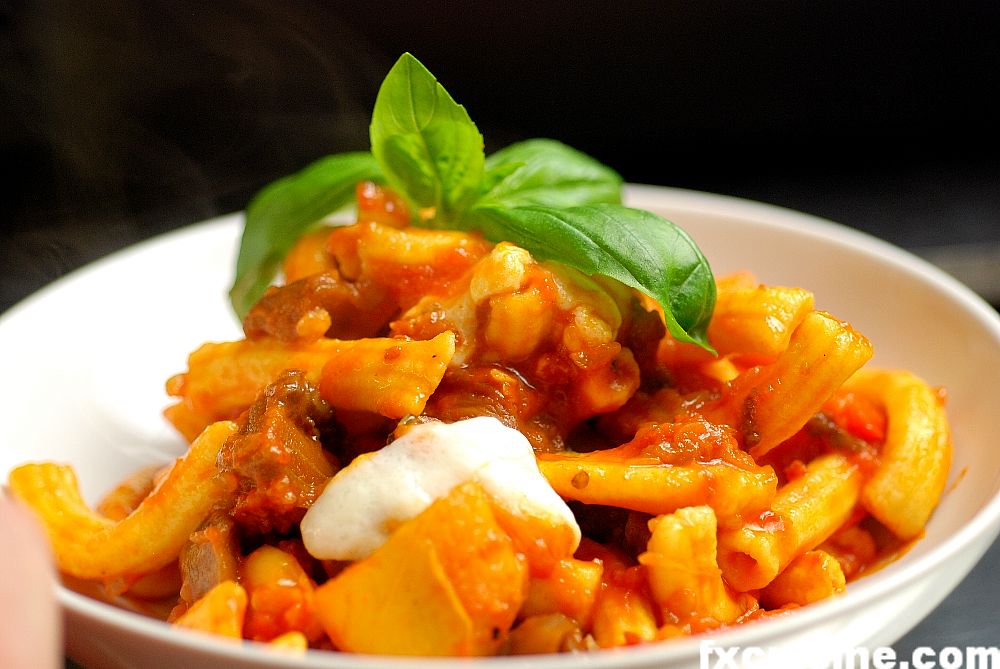
Basic Vodka Sauce

Last Sunday was my last day of summer vacation, as teachers reported back to school Monday for our annual week of work to prepare for the students' return on the twenty-seventh. To commemorate a great summer, I threw a pile of padron peppers in a frying pan, defrosted a box of Christopher Sauce, boiled a box of pasta and called it a party.

The padrons were so spicy that we all needed a beer before moving on to the pasta. Instead of crab and egg crepes, I kept it more traditional this time with sausage and rigatoni.


Vodka Sauce with Sausage 
Serves 4

1 pound sausage, casings removed
6 tbs olive oil
5 cloves garlic, diced
1+ tsp crushed red pepper
1 28-oz can crushed tomatoes or 2 cups Christopher Sauce  or 2 pounds fresh tomatoes, cored, peeled and chopped
1/2 cup vodka
1 cup cream
1/2 tsp black pepper
12 fresh basil leaves, chopped or 1 tsp dried basil
salt

note: If you're using Christopher Sauce, you can skip steps 2 and 3. 

1. Heat 2 tbs olive oil in a sauce pan, then brown the sausage.

2. Remove the sausage and add the remaining 4 tbs oil and garlic. 

3. Before the garlic begins to brown, add the crushed red pepper and let cook for 30 seconds.

4. Add the tomatoes or Christopher Sauce. Simmer for 10 minutes, then add salt to taste.

5. Add the vodka, stir, and let simmer for another 5 minutes.

6. Add the cream, black pepper and basil. Stir and lightly simmer for 5 more minutes.

7. Transfer the sauce to a blender or food processor and mix until it becomes a rough puree. 
8. Return it to the pan and add the pasta and sausage. Toss, simmer for a couple more minutes and serve.

Sunday, August 19, 2012

Back in Action

It's been a long time since my last post, but I've stayed busy cooking and eating. Stay tuned for new recipes, and in the meantime check out the redesigned site and highlights from our time away.

Oysters, 
courtesy of Walking Fish

Steamer plate for two
Wilmington, NC

Crab Nachos 
South Beach Grill
Wrightsville Beach, NC

Grilled Magherita Pizza

Hawaiian Haystacks 
(a Utah classic), 
Courtesy of Meghan Kennedy and Lloyd Rickenbach

Salad Nicoise
Durham, NC

Baguette
Durham, NC 

Thursday, December 22, 2011

Shrimp linguini with collard greens

North Carolina's mild winters allow some crops to grow year-round. The best greens of the year come during the winter, when the cold temperatures increase the sugar content in the leaves and give everything from lettuce to kale a crisp texture and sweet flavor.
 Collard greens are especially abundant, inexpensive and nutrient-rich. You can saute them with anchovies and lemon juice and serve them as a side dish, or add eat them with pasta and shrimp like I prefer. 

Sunday, December 11, 2011

Flounder, Piccatta Style

I'm torn each week when Walking Fish emails me a description of the week's fresh catch. I love the challenge of a new species, as it gives me an excuse to read up on them and decide how to prepare them. But I also love the old reliables, like clams and flounder, because they challenge me to find new ways to prepare them.

We receive flounder at least once a month. Shefali and I have eaten it grilled, oven baked, fried with chips, seasoned and sauteed, and even in po' boy sandwiches. This week, we substituted it for chicken in one of my family's favorite recipes.

Piccatta is traditionally prepared with veal and involves breading and frying the meat, removing it from the pan and building an accompanying sauce that features lemon and capers. Chicken is a very popular substitution for veal and my family's choice growing up (my mother refuses to cook or eat veal). We ate it over a bed of linguine.

When I prepared the flounder Piccatta style I chose not to pair it with pasta. A breaded and pan-fried meat holds its own in a subtle sauce, but when it's paired with pasta it often loosens up and kills the meat's texture. Cooks work so hard to achieve the golden, crunchy exterior that it's best enjoyed alongside some other starch. We paired ours with roasted potatoes and a salad.

Flounder, Piccatta Style

4 tbs olive oil
2 pounds flounder fillets
4 cloves garlic, diced 
3-4 tbs shallot, diced
a handful of fresh parsley, chopped
1/2 cup dry white wine. I use a sauvignon blanc
2 tsp capers, drained and rinsed
2 lemons, halved or quartered
flour for dusting
salt and pepper, to taste

1.  Heat the olive oil in a pan.
2. Season a plate of flour with salt and pepper, then dredge both sides of the fillets. Shake off the excess flour, then fry both sides in the oil, about 3 minutes each.
3. Remove the fillets and add the garlic. As soon as the garlic begins to brown add the shallot.
4. When the shallots become translucent (about 5 minutes), add the wine, juice from 1 lemon and capers. Be sure to scrape the bottom of the pan with a wooden spoon to break up the loose bits. They add massive flavor to the sauce.
5. Let the wine simmer for about 5 minutes or until it no longer smells of alcohol, then return the fish to the pan and add the parsley. Let the flavors combine and flip the fish at least once.
6. Add extra lemon juice, salt and pepper to taste, then serve.

Sunday, December 4, 2011

Christmas Comes Early

My mother-in-law, Arati, has arrived in the U.S. to help us care for our new son.


Just her casual Sunday dinner of channa masala, kofta curry, kachumber and naan. All made fresh and from scratch.

I have much to learn while she's here. Recipes to follow!

Friday, November 18, 2011

Don't Throw Away Your Carrot Tops

Last weekend I watched a market vendor cut the greens from a bunch of carrots and throw them into a large bin before handing the orange roots to a customer.

"What do you do with the greens?" I asked as I paid her for my own bunch.

"Feed 'em to the rabbits," she said.

"You don't cook with them?"

"We never have," she said. "The greens are chewy, and they taste like...carrots."

Intrigued, I kept my greens and asked her for extra from her rabbit bin.

"Knock yourself out," she said. "and let me know what you come up with."

I tasted a stalk and agreed that they are indeed chewy. And the greens do taste like carrots, but the texture and small leaves also remind me of parsley. Surely there's a meal that can utilize this forgotten part of one of America's most common vegetables.

As I thought of the foods most commonly paired with carrots - celery and onion in soups, cabbage in coleslaw, nuts and cream cheese in carrot cake, etc. - I recalled market director Erin Kaufman's recent note about pesto in her weekly email:

The word pesto originates from the Italian word ""pestare", which means to pound.  Pesto is just an adjective that means "pounded".  When we think of pesto, basil immediately comes to mind, since it is common and delicious sauce for pasta, potatoes, etc.  This week, after an illuminating conversation with Phoebe from Scratch (and a piece of pie that included radish top pesto), I was reminded that you can make pesto out of all kinds of things.  And right now, the Market is bursting at the seams with green things that you can pound up into a delicious paste that you can add to all kinds of dishes.
I'd seen pesto recipes that called for parsley to compliment basil and arugula. Since pesto is a good way to break down large quantities of greens and herbs into small but potent servings, why wouldn't it work with carrot greens?

It felt like a proud moment of culinary trail blazing (though I'm far from the first person to make carrot green pesto), and the result works great on sandwiches (especially leftover turkey sandwiches...), sitting on the surface of a bowl of soup, and even tossed with roasted potatoes.

Carrot Green Pesto
2 large handfuls carrot greens, stems removed
2 garlic cloves
1 small handful roasted almonds
15 basil leaves 
1/4-1/2 cup olive oil, depending on desired taste and thickness
1 handful Parmesan cheese
salt and pepper

1. Combine the carrot greens, basil, garlic and almonds in a mortar and pestle or food processor.

2. As you mix, pound or pulse the ingredients into a paste, slowly add the olive oil until you reach the desired thickness.

3. Add the cheese, salt and pepper and serve. 

**Note: to thin pesto, add additional oil. To thicken it, add cheese.


Tuesday, November 8, 2011

Diwali 2011

For the first time since moving to the U.S. in 2001, Shefali celebrated the Diwali holiday in style by hosting a party and serving traditional Indian food.

Diwali is a Hindu celebration of lights. It occurs each fall,when a new moon arrives sometime between mid-October and mid-November (it fell on October 26 this year). Shefali's family also takes time during Diwali to honor Laksmi, goddess of wealth. They usually celebrate with fireworks, alcohol, gambling, and of course great food.


In preparation, we woke up early Saturday morning and drove to Cary's "little India" district to shop for authentic groceries like chaat masala, tandoori paste (I have never tried making my own), bitter mango, desi dahi and green chutney. After we hit Patel Brothers' grocery store we bought fresh kaju katri and golab jamun from Mithai across the street. The guys at Mittai make traditional desserts in-house, and they're the best we've had on this side of the world.

We returned home and began cooking around 2:30. Shef made a huge batch of her mother's world famous chicken curry while I threw together the kachumber, eggplant bhartha and broiled okra. The meal came together around 7 p.m., just as twelve friends and neighbors climbed our candle-lit staircase and joined us to feast.

After dinner we crushed the desserts, then laid a bed sheet on the living room floor. In honor of Laksmi, everyone drank beer and played poker. It was a great way to celebrate and share the holiday with others, especially since several of our friends ate (and loved) Indian food for the first time.

Diwali will likely become an annual affair, as we're already talking about how bottles of Kingfisher, Bollywood music and fireworks will make next year's party a real bash. Until then, enjoy the recipes.

Arati's Eggplant Bhartha

1/2 cup spring onions, chopped
3 large eggplants
1 15-oz can diced tomatoes
2 tsp corriander
2 tsp cumin
2 tsp turmeric
1 tsp red chili powder (to taste)
fresh cilantro
salt, to taste

1. Roast the eggplant in a 400-degree oven until the skin gets quite crisp (about 25 minutes), then peel and chop into cubes. Roasting the eggplant gives it a lovely smokey flavor.  
 NOTE: If pressed for time, skip step one and simply cube the eggplant.

2. combine all ingredients and cook on low heat for approximately 60 minutes. When the ingredients are blended together and the excess water from the veggies has dried up, balance the seasonings, add a handful of cilantro leaves and serve.

Broiled Okra with Chaat Masala

1 pound fresh okra, preferably small, thin pods
3 tbs olive oil
salt
pepper
2+ tsp chaat masala

1. Set the oven to broil, then half the okra lengthwise and toss with the olive oil and chaat masala.

2. Arrange the okra in a baking dish, skin side down, and broil until crisp, about 30 minutes.

3. Add additional chaat masala to taste and serve. 


Wednesday, October 19, 2011

Triggerfish

Walking Fish has been delivering a great variety of seafood this fall. I've received flounder, spot, shrimp, clams and triggerfish all in the past month.


Triggerfish live throughout the Atlantic and can grow to 13 pounds. They are a tall, narrow fish that hides from predators by fitting into thin crevices.


Triggerfish deliveries are especially exciting, not just for me but for the guy standing behind me in the pickup line last week as well.

"This is the reason I buy Walking Fish shares," he said, admiring the bags of firm, white fillets.

"How do you cook it?" I asked.

"Grilled or broiled, no seasoning. This fish has a rich, buttery flavor that stands on its own."

Inspired by his simplicity, I pan-seared the fillets in olive oil, adding only salt and lemon. Triggerfish have flesh similar to grouper, so they keep their shape as you cook them, even at high temperatures. I seared each side on high heat for 2-3 minutes.

The guy waiting in line behind me was right. This fish needs little to no seasoning. We ate it alongside fresh pepperonata, potatoes and salad.

The green plate was a bad choice.


Pepperonata is a great option this time of year, because nearly all the ingredients are available locally. There are hundreds of ways to prepare it, but this recipe is both substantial and unique because it includes potatoes. This preparation was largely influenced by the recipe in Toni Lydecker's Seafood Alla Siciliana. 

Pepperonata with Potatoes

Serves 4

4 tbs olive oil
4 cloves garlic, diced
1 small onion, chopped
5-6 small sweet bell peppers (or 2-3 large ones), cut into strips or squares
1 pound potatoes (preferably small and red-skinned), cubed
2 tomatoes, peeled and chopped**
crushed red pepper, to taste
salt, to taste

**To peel tomatoes, cut out the core, then immerse them in boiling water for about 30 seconds. As soon as the skin starts to separate, plunge them into a bowl of ice water, then peel them. 

1. Heat the olive oil over medium heat, then add the garlic.

2. When the garlic is fragrant but not brown (30-60 seconds)

3. Add the anchovies and stir them until they dissolve into the oil.

4. Add the peppers, crushed red pepper (optional), potatoes, tomatoes, salt (Lydecker recommends 1/2 tsp), and 1/2 cup water. 

5. Stir, cover and let simmer for about 30 minutes, or until the potatoes are tender. Check the pan regularly and add extra water, if necessary. This side can be served warm or at room temperature. 

Wednesday, October 12, 2011

Vodka Sauce - a Variation

One way to quickly judge an Italian restaurant's menu is to scan the number of different sauces it pairs with pasta. All too often restaurants will serve a dozen different pasta shapes "tossed in a cream sauce." It's hard to screw up a cream sauce, since large doses of dairy (like heavy cream) can mask even the most horrendous sauces. When I see a menu full of cream sauces, I immediately lower my expectations.

That does not, however, mean that all cream sauces are garbage.

One way to build great flavor into a cream sauce is to add liquor, let the alcohol cook away, then add the cream. This will give you a base of flavors in the sauce that the cream won't overwhelm.

A great example is the brandy cream sauce at Bocci. Its bold flavor includes, but isn't limited to, the cream that thickens it. Plus, it's great with seafood. Bocci's former (Sicilian) chef, Michelle Rizzo, used to offer a dish called "crepes alla Michelle," featuring shrimp and scallops in the brandy cream sauce, served over an egg crepe instead of pasta. It was my favorite meal on the menu.

One of Shefali's favorite sauces is the more traditional vodka sauce. Often served at restaurants with sausage and penne, the vodka, black pepper, and crushed red pepper makes it spicier than most cream sauces. We make it at home regularly and experiment with different ways to serve it.

I've found that crab meat works especially well with vodka sauce. It's a lighter protein source than sausage, which works well because it offsets the heavy cream, and the sweetness of the crab meat compliments the acidity from the tomatoes. In honor of chef Rizzo, we eat it over eggs.

Vodka Sauce with Crab Over Crepes

Serves 4

1 pound (or more) lump crab meat, cooked
4 tbs olive oil
5 cloves garlic, diced
1+ tsp crushed red pepper
1 28-oz can crushed tomatoes or 2 cups Christopher Sauce  or 2 pounds fresh tomatoes, cored, peeled and chopped
1/2 cup vodka
1 cup cream
1/2 tsp black pepper
12 fresh basil leaves, chopped or 1 tsp dried basil
salt

1. Heat the olive oil in a sauce pan, then add the garlic. 

2. As the garlic begins to brown, add the crushed red pepper and let cook for 30 seconds.

3. Add the tomatoes or Christopher Sauce and simmer for 10 minutes. After 10 minutes, add salt to taste.

4. Add the vodka, stir, and let simmer for another 5 minutes.

5. Add the cream, black pepper and basil. Stir and simmer for 5 more minutes.

6. Transfer the sauce to a blender or food processor and mix until it becomes a rough puree.

7. Return it to the pan, add the crab, simmer for a couple more minutes and serve.

Egg Crepes

8 eggs
1/4 cup milk or cream
2 tbs olive oil or butter
salt

1. Beat eggs together with milk and salt.
2. Heat the olive oil in a skillet, then add 1/4 of the egg batter.
3. Let the batter set. Run a spatula underneath it to keep it from sticking. Flip the egg once, let it cook through, then slide out of the pan.
4. Roll the crepe on a plate and top with the sauce.
5. Repeat.

Wednesday, October 5, 2011

Meals of the month - September 2011

Each month, Shefali and I stumble upon some fantastic meals. Some of them are out around town, and others we make at home by following someone else's recipe. Here are September's highlights:

- Spaghetti and meatballs, family-style. A group of our friends takes turns hosting dinners each month. Our turn came up in September, so I simmered a pot of Christopher Sauce overnight, rolled meatballs the following morning and threw them in the pot to cook all day. The meatball recipe, to my knowledge, has never been written down. Someday I'll take the time to measure the ingredients and post it. 

- Fresh shrimp from Walking Fish. It's going to be hard to cook with frozen bags of shrimp now that I've eaten the real thing. We received three pounds of them, and grilled them all, tossing the first batch in salmorilgio sauce, topping the second in buffalo sauce and eating them in a sandwich with pea shoots and ranch dressing, and throwing the batch in a seafood risotto.

- Crab Cakes and Fava Bean Salad at Vita: I don't often order crab cakes, but Vita was offering it as a special. They were the best I've had since moving to NC. Vita's one of our favorite restaurants right now. The menu isn't extensive, but what they do (fresh pasta, bread, brunch), they do well. Plus, they do it for a student-friendly price, as entrees start at just $9.

- The "Sicilian Cash Cow" - Francois Xavier's blog hasn't been updated in a couple years, but the multilingual Swiss has a passion for Sicilian food. The "cash cow" is his version of a popular Sicilian dish from a favorite Italian restaurant in Geneva. As the weather cools off, baked pasta becomes relevant again. This one makes great use of fall veggies like eggplant and sweet bell peppers.


- The Durham Farmer's Market Chef Challenge. This celebration of okra was phenomenal. read about it here.