Wednesday, October 19, 2011

Triggerfish

Walking Fish has been delivering a great variety of seafood this fall. I've received flounder, spot, shrimp, clams and triggerfish all in the past month.


Triggerfish live throughout the Atlantic and can grow to 13 pounds. They are a tall, narrow fish that hides from predators by fitting into thin crevices.


Triggerfish deliveries are especially exciting, not just for me but for the guy standing behind me in the pickup line last week as well.

"This is the reason I buy Walking Fish shares," he said, admiring the bags of firm, white fillets.

"How do you cook it?" I asked.

"Grilled or broiled, no seasoning. This fish has a rich, buttery flavor that stands on its own."

Inspired by his simplicity, I pan-seared the fillets in olive oil, adding only salt and lemon. Triggerfish have flesh similar to grouper, so they keep their shape as you cook them, even at high temperatures. I seared each side on high heat for 2-3 minutes.

The guy waiting in line behind me was right. This fish needs little to no seasoning. We ate it alongside fresh pepperonata, potatoes and salad.

The green plate was a bad choice.


Pepperonata is a great option this time of year, because nearly all the ingredients are available locally. There are hundreds of ways to prepare it, but this recipe is both substantial and unique because it includes potatoes. This preparation was largely influenced by the recipe in Toni Lydecker's Seafood Alla Siciliana

Pepperonata with Potatoes

Serves 4

4 tbs olive oil
4 cloves garlic, diced
1 small onion, chopped
5-6 small sweet bell peppers (or 2-3 large ones), cut into strips or squares
1 pound potatoes (preferably small and red-skinned), cubed
2 tomatoes, peeled and chopped**
crushed red pepper, to taste
salt, to taste

**To peel tomatoes, cut out the core, then immerse them in boiling water for about 30 seconds. As soon as the skin starts to separate, plunge them into a bowl of ice water, then peel them. 

1. Heat the olive oil over medium heat, then add the garlic.

2. When the garlic is fragrant but not brown (30-60 seconds)

3. Add the anchovies and stir them until they dissolve into the oil.

4. Add the peppers, crushed red pepper (optional), potatoes, tomatoes, salt (Lydecker recommends 1/2 tsp), and 1/2 cup water. 

5. Stir, cover and let simmer for about 30 minutes, or until the potatoes are tender. Check the pan regularly and add extra water, if necessary. This side can be served warm or at room temperature. 

Wednesday, October 12, 2011

Vodka Sauce - a Variation

One way to quickly judge an Italian restaurant's menu is to scan the number of different sauces it pairs with pasta. All too often restaurants will serve a dozen different pasta shapes "tossed in a cream sauce." It's hard to screw up a cream sauce, since large doses of dairy (like heavy cream) can mask even the most horrendous sauces. When I see a menu full of cream sauces, I immediately lower my expectations.

That does not, however, mean that all cream sauces are garbage.

One way to build great flavor into a cream sauce is to add liquor, let the alcohol cook away, then add the cream. This will give you a base of flavors in the sauce that the cream won't overwhelm.

A great example is the brandy cream sauce at Bocci. Its bold flavor includes, but isn't limited to, the cream that thickens it. Plus, it's great with seafood. Bocci's former (Sicilian) chef, Michelle Rizzo, used to offer a dish called "crepes alla Michelle," featuring shrimp and scallops in the brandy cream sauce, served over an egg crepe instead of pasta. It was my favorite meal on the menu.

One of Shefali's favorite sauces is the more traditional vodka sauce. Often served at restaurants with sausage and penne, the vodka, black pepper, and crushed red pepper makes it spicier than most cream sauces. We make it at home regularly and experiment with different ways to serve it.

I've found that crab meat works especially well with vodka sauce. It's a lighter protein source than sausage, which works well because it offsets the heavy cream, and the sweetness of the crab meat compliments the acidity from the tomatoes. In honor of chef Rizzo, we eat it over eggs.

Vodka Sauce with Crab Over Crepes

Serves 4

1 pound (or more) lump crab meat, cooked
4 tbs olive oil
5 cloves garlic, diced
1+ tsp crushed red pepper
1 28-oz can crushed tomatoes or 2 cups Christopher Sauce  or 2 pounds fresh tomatoes, cored, peeled and chopped
1/2 cup vodka
1 cup cream
1/2 tsp black pepper
12 fresh basil leaves, chopped or 1 tsp dried basil
salt

1. Heat the olive oil in a sauce pan, then add the garlic. 

2. As the garlic begins to brown, add the crushed red pepper and let cook for 30 seconds.

3. Add the tomatoes or Christopher Sauce and simmer for 10 minutes. After 10 minutes, add salt to taste.

4. Add the vodka, stir, and let simmer for another 5 minutes.

5. Add the cream, black pepper and basil. Stir and simmer for 5 more minutes.

6. Transfer the sauce to a blender or food processor and mix until it becomes a rough puree.

7. Return it to the pan, add the crab, simmer for a couple more minutes and serve.

Egg Crepes

8 eggs
1/4 cup milk or cream
2 tbs olive oil or butter
salt

1. Beat eggs together with milk and salt.
2. Heat the olive oil in a skillet, then add 1/4 of the egg batter.
3. Let the batter set. Run a spatula underneath it to keep it from sticking. Flip the egg once, let it cook through, then slide out of the pan.
4. Roll the crepe on a plate and top with the sauce.
5. Repeat.

Wednesday, October 5, 2011

Meals of the month - September 2011

Each month, Shefali and I stumble upon some fantastic meals. Some of them are out around town, and others we make at home by following someone else's recipe. Here are September's highlights:

- Spaghetti and meatballs, family-style. A group of our friends takes turns hosting dinners each month. Our turn came up in September, so I simmered a pot of Christopher Sauce overnight, rolled meatballs the following morning and threw them in the pot to cook all day. The meatball recipe, to my knowledge, has never been written down. Someday I'll take the time to measure the ingredients and post it. 

- Fresh shrimp from Walking Fish. It's going to be hard to cook with frozen bags of shrimp now that I've eaten the real thing. We received three pounds of them, and grilled them all, tossing the first batch in salmorilgio sauce, topping the second in buffalo sauce and eating them in a sandwich with pea shoots and ranch dressing, and throwing the batch in a seafood risotto.

- Crab Cakes and Fava Bean Salad at Vita: I don't often order crab cakes, but Vita was offering it as a special. They were the best I've had since moving to NC. Vita's one of our favorite restaurants right now. The menu isn't extensive, but what they do (fresh pasta, bread, brunch), they do well. Plus, they do it for a student-friendly price, as entrees start at just $9.

- The "Sicilian Cash Cow" - Francois Xavier's blog hasn't been updated in a couple years, but the multilingual Swiss has a passion for Sicilian food. The "cash cow" is his version of a popular Sicilian dish from a favorite Italian restaurant in Geneva. As the weather cools off, baked pasta becomes relevant again. This one makes great use of fall veggies like eggplant and sweet bell peppers.


- The Durham Farmer's Market Chef Challenge. This celebration of okra was phenomenal. read about it here.


Tuesday, September 27, 2011

Chef Challenge Recap


Though the forecast called for steady rain, the weather cooperated on Saturday morning and the third annual Durham Farmer’s Market Chef Challenge was a success.


Beginning at 8:30, Fank Stasio, serving as emcee, introduced chefs Billy Cotter (Toast), Josh DeCarolis (Dos Perros and Jujube), and Shane Magowan (Geer Street Garden) and judges Johanna Kramer, Ross Grady, Heather Greer Klein and myself. A modest crowd gathered on the market lawn when he announced the secret ingredient: Okra!

The chefs had two hours to buy their ingredients at the market and prepare entrees for the four judges as well as 70 samples for the crowd.

Thursday, September 22, 2011

Muscadine Season

Each fall, I can't resist buying a pint of local muscadine grapes. Also known throughout North Carolina as scuppernogs, few foods have such a strong local connection. In addition to the numerous NC wineries that feature muscadines, NC State University's Cooperative Extension website explains Carolinians' unique love affair with this spunky fruit:


Muscadine grapes are well adapted to the Coastal Plain of North Carolina, where temperatures seldom fall below 10°F. Considerable injury generally occurs where winter temperatures drop below 0°F. Some of the more hardy cultivars such as 'Magnolia', 'Carlos' and 'Sterling' survive northward to Virginia and westward to the foothills of the Blue Ridge Mountains. Muscadines have a high degree of tolerance to pests and diseases that makes the production of bunch grapes nearly impossible in eastern North Carolina. There is no other fruit with such strong personal associations for so many native North Carolinians. The fruit has a distinct fruity or "musky" aroma, while the juice by itself is sweet with a light taste and aroma. The fruit is very popular with native Southerners for making into wine, pies and jellies. 


I'm a big fan of the muscadine's sweet, mild flesh, but its tough skin and numerous seeds (there can be as many as five in each berry) can be a challenge. I found a way around the skin and seeds tonight by substituting muscadines for the raspberries in my dad's dessert recipe. We strained the sauce, then poured it over a bowl of vanilla ice cream and sliced banana.

If anyone has a favorite way to use muscadines, leave a comment! 

Sunday, September 18, 2011

Whose Cuisine Reigns Supreme?

I'll be participating as a judge this Saturday, September 24 at the Durham Farmer's Market's third annual chef challenge.

Billy Cotter of Toast, Josh DeCarolis of Dos Perros, and Andy Magowan of Geer Street Garden will create meals using a secret ingredient in hopes of earning them the title of 2011 champ. They will also provide samples of their creations to market shoppers throughout the morning. Don't miss it!

Wednesday, September 14, 2011

Grilled Peaches with Rasberry-Balsamic Sauce

The Christopher males are not known for their desserts, but I mentioned in last week's post that my dad made a very simple one that everybody loved. The sauce features two different kinds of summer fruit and works well as a topping for many different foods. Apparently my mom puts it on everything from bananas to cottage cheese.


Grilled Peaches with Rasberry-Balsamic Sauce


2 pints ripe fresh raspberries
2 Tbs balsamic vinegar
3-4 Tbs sugar depending on how sweet you like it
3 Fresh ripe peaches
2Tbs butter
2 Tbs brown sugar
Vanilla ice cream
 
1. Combine the sugar and balsamic vinegar in a saucepan and heat until sugar is fully dissolved.  
 
2. Slightly crush the raspberries and add them to the saucepan.  Cook on medium heat for 10 minutes while stirring routinely.  
 
3. Once it's done, you can serve as is or put the mixture through a sieve to remove the seeds for a smooth sauce.  The sauce can be kept refrigerated for 1-2 weeks.
 
4. Cut peaches in half and remove the pit. 
 
5. Combine brown sugar and butter in a pan and heat until sugar dissolved.  While the mixture is still hot, brush the peaches with the mixture on the flesh side.  
 
6. Put the peaches flesh side down on a hot grill. Grill until they are glazed and the peaches begin to soften.
 
7. Place a peach in a bowl, add a small scoop of vanilla ice cream and cover with your raspberry sauce.

Tuesday, September 6, 2011

A Family Meal, Starring an Unfamiliar Leaf

The Ohio Christophers visited us for Labor Day weekend. Any time the family gets together an epic meal occurs, so before everyone went to work building nursery furniture, throwing a baby shower and watching college football, I took them to the farmer's market for inspiration.

The market was as busy as I've ever seen it, but that didn't stop us from picking up fresh peppers, onions, garlie, eggs and sweet potato greens. That evening, we recreated Tony's Three Pepper Parade along with fresh fetuccine, sauteed sweet potato greens (recipe after the jump), tomato and bean salad and grilled peaches with ice cream and a rasberry-balsamic sauce for dessert.

Tuesday, August 30, 2011

Three Pepper Parade

This week's post comes from Cleveland, where my brother used local meat, produce and pasta to create a most excellent photo and meal.

Hello blogger friends! This weekend I used a variety of ingredients from my Fresh Fork CSA basket and made a dynomite Italian dish.

I call it "Italian Three Pepper Parade," or stuffed bell and banana peppers over red pepper pasta. Here's how I did it:

Tuesday, August 23, 2011

Pasta Alla Norma

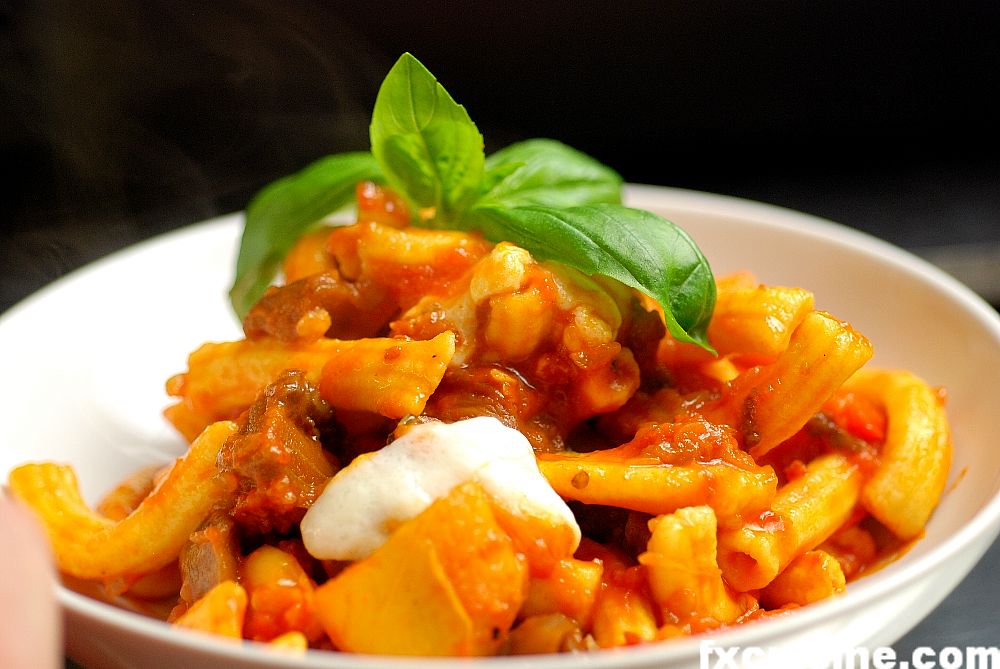
I took another trip to the farmer's market on Saturday...and came home with four more pounds of eggplant. This week, it went into pasta alla Norma.

Pasta alla norma is almost as old as the island of Sicily itself. Named after the heroine in Vincenzo Bellini's famous opera, Norma, the two-act performance tells the story of the Druid priestess Norma, whose husband Pollione tries to run away to Rome with the Adalgisa, another priestess. Out of loyalty to Norma, Adalgisa tells her about the affair. Norma considers murdering her two children but decides to leave them with Adalgisa instead. Adalgisa, however, then renounces her love for Pollione and urges him to return to his wife.


Infuriated, Norma calls a meeting with the Druids and declares war against the Pollione's Romans. The declaration requires a sacrifice, which conveniently presents itself when Pollione is caught entering the temple of virgins to visit Adalgisa and is subsequently sentenced to death. Minutes before Pollione's execution Norma, deeply saddened by the turn of events, decides to take his place. Inspired by her benevolence, Pollione rekindles his love for his wife and joins her in the pyre.

First produced in 1831, Norma was immediately hailed a success, so much so that people began using the title as a term of endearment. For example, one's favorite music could be called "musica alla Norma," the best poetry "poesia alla Norma." As the pasta became one of Sicily's most famous dishes, it became known as pasta alla Norma.

I don't know about you, but all this talk about lyric tragedies is making me hungry. Let's move on to the recipe.
The innumerable variations of this recipe typically include:

- eggplant, fried in oil before its added to the sauce
- tomatoes
- cheese
- pasta
-a spicy pepper
-fresh basil

Here's my take:

Pasta Alla Norma

vegetable oil 
olive oil
2 pounds eggplant, cut into 1/2" cubes
4 cloves garlic*
2 tsp salt 
crushed red pepper, to taste
1 big can of diced tomatoes or 2 cups Christopher Sauce or 2 cups fresh tomatoes, peeled and diced
12 fresh basil leaves, roughly chopped
1/4 pound roughly-grated ricotta salata**
1 box short, tubular pasta, like penne or rigatoni

*If you're using a premade sauce (that already includes garlic) instead of tomatoes, consider reducing or omitting the garlic

**Ricotta salata is salted sheep's milk ricotta cheese. It's much more firm than regular ricotta. Substituting ricotta produces a smooth, creamy sauce that's different in texture but equally raucous. Another option is to substitute another firm, salty cheese like pecorino romano. 

1. Placed the diced eggplant and salt in a strainer with a bowl underneath, then put something heavy on top. Let the eggplant sit for an hour. During this time, the salt will pull the bitter juices from the eggplant pieces into the bowl underneath the strainer. 

2. Fill the bottom of a saucepan with 1/4" of vegetable oil. When the oil is hot (test it), add the eggplant.

3. Stir the eggplant frequently as it fries, being careful not to break the pieces. Add more oil if necessary. When the eggplant has turned golden brown, remove them with a slotted spoon and place them on a plate lined with paper towel to dry. 

**Note: now would be a good time to begin boiling your pasta water

4. Discard the vegetable oil from the pan. Wipe the pan clean and return it to medium heat. 

5. Add 2 tbs olive oil to the now empty saucepan. Just before the oil begins to smoke, add the garlic. As the garlic begins to brown, add the crushed red pepper and let simmer for 30 seconds.

6. Add the tomatoes and simmer until the sauce thickens, 5-10 minutes. 

7.  When the sauce has reached its desired consistency, add the eggplants and fresh basil and let the sauce simmer on low heat for 5 more minutes.

8 Serve the sauce over pasta and garnish with grated cheese and additional basil.